
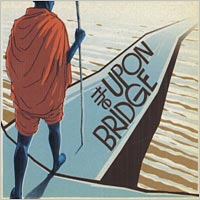
Since its debut, Groundation has been weaving a web whose outlines gradually take shape. Album after album, the pieces of the puzzle draw a whole. For the road to this fifth album, "Upon the bridge", is anything but chance. Each album dwells on a key moment in the evolution of the individual. "Young Tree", their first album, naturally deals with the themes of birth and genesis, which can also be read as a metaphor for the birth of the band. What follows tracks human development: "Each one teach one" tackles the question of self-knowledge, through interaction with others, socialisation. The Gate of Hebron, the title of the third album, symbolises the conflicts the individual must settle, both inner and outer, which, once settled, see the birth of a liberated, mature, conscious man ("We Free Again"). It is now up to him to set off and discover an uncertain world.
The theme of this fifth album, the bridge, is far from innocent. It evokes the idea of a junction, but also of a border. Of uncertainty too: we know it leads somewhere, but not necessarily where. This is what Harrison Stafford said in an interview (read here): "We are undeniably going somewhere, and there are several paths we can take to get there. We don’t know whether the one our society has taken, the one we are on, will take us to a good place or not. We are not on the ground, we are not resting on something solid. We know nothing! We are on the bridge, anything can happen."
It is this conceptual density that strikes you first, even if the result does not always live up to the intention. The fault lies with lyrics that are most often surreal and hinder overall understanding. One will prefer the text of about a dozen pages in the booklet that is meant to "accompany the listening", a gripping story that allows a better grasp of the album and the recurring themes in Groundation’s work. The fan of the Californian outfit will be neither disoriented nor disappointed. True to their music, the rhythms are jazzy, incredibly sharp and leave room for a large share of improvisation. The first and last tracks, as is their habit, are of the very first order, like Upon the bridge, the track of the crossing, which naturally sits right in the middle of the tracklist. The extended metaphor will please some as much as it irritates others, but one thing is clear: where Groundation ventures, nobody has yet dared to go.